


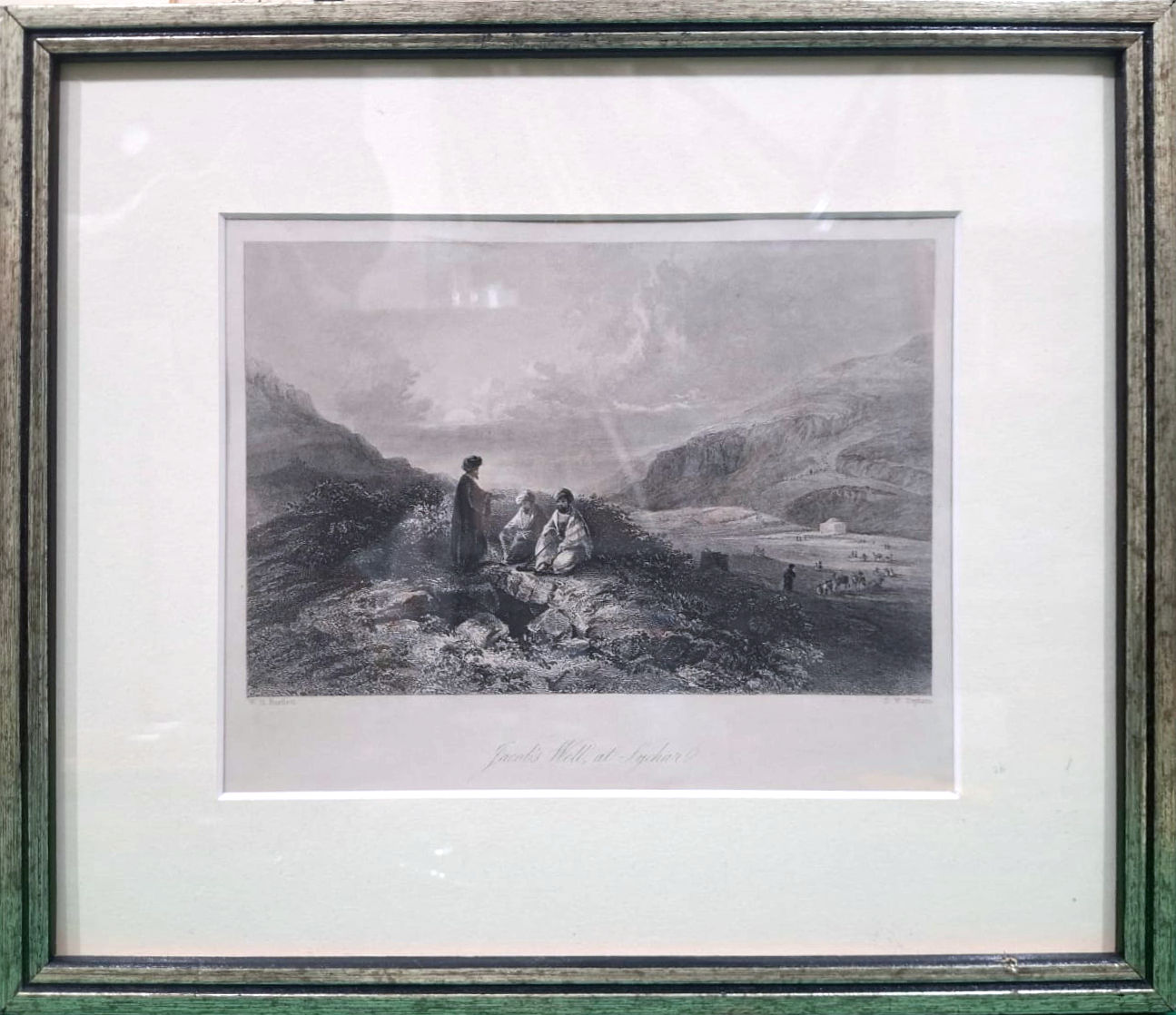
W.H. Bartlett - Jacob's Well, at Sychar (1840)
Artist: William Henry Bartlett (1809–1854)
Engraver: E.W. Topham (active 1840s)
Technique: Original Antique Steel Engraving
Dimensions: Plate: approx. 12.5x19.0 cm (excluding frame)
Status: Authentic circa 1840 print, explicit text attributions on the lower plate border, beautifully mounted and framed in a custom gallery frame
Publisher: George Virtue, London
About the Artwork:
This authentic antique steel engraving, published circa eighteen forty, captures a highly revered biblical landscape titled Jacob's Well, at Sychar (located near modern-day Nablus, West Bank). The site carries immense historical and theological weight, famously documented in the Gospel of John chapter four, where Jesus meets the Samaritan woman at the well dug by the patriarch Jacob. Masterfully drawn from nature by the prominent British topographical illustrator William Henry Bartlett, the composition focuses on the ancient stone-rimmed circular opening of the well in the left foreground. Three regional figures in traditional Ottoman-era drapery are depicted resting on the grassy mound immediately surrounding the well. The expansive landscape rolls down into the fertile valley of Shechem, backdropped by the dramatic, rising mountain slopes of Mount Gerizim and Mount Ebal under an atmospheric sky. A distant caravan with camels and a local building are visible in the background. Engraved onto steel with exceptional fine-line precision and tonal depth by E.W. Topham, this framed print is a premium collector's piece of Holy Land iconography.
About the Artists:
William Henry Bartlett (1809–1854): One of the most celebrated and prolific British topographical illustrators of the nineteenth century, famed for his highly accurate on-the-spot travel sketches of the Middle East, Europe, and North America.
- E.W. Topham (Active 1840s): An accomplished English landscape line engraver who worked alongside premier London print publishers to capture the subtle textures and lighting of travel drawings.
ויליאם הנרי בארטלט – באר יעקב, שומרון (1840)
אמן: ויליאם הנרי בארטלט (1809–1854)
חרט: א"ו טופהאם (E.W. Topham)
טכניקה: תחריט פלדה אנטיק מקורי משנת אלף שמונה מאות ארבעים לערך
מידות: לוח: כ-12.5x19.0 ס"מ (גודל היצירה ללא המסגרת)
מצב: פריט אותנטי, כיתוב מקורי מטושטש בשולי הלוח התחתון, היצירה מגיעה כשהיא מסוגרת במסגור גלריה איכותי הכולל פספרטו (מאט) וזכוכית מגן במצב שימור מעולה
מוציא לאור: ג'ורג' וירצ'ו, לונדון (George Virtue)
על היצירה:
תחריט פלדה מקורי, נדיר ובעל חשיבות דתית והיסטורית עצומה שפורסם סביב שנת אלף שמונה מאות ארבעים, המציג את באר יעקב ההיסטורית שבשומרון (סמוך לתל בלאטה / שכם של ימינו). לאתר חשיבות תיאולוגית עילאית במסורת היהודית והנוצרית כאחד, ומקושר ישירות לסיפור המפורסם בספר הבשורה על פי יוחנן, פרק ארבע, שם פגש ישו את האישה השומרונית לצד הבאר שחפר יעקב אבינו. הקומפוציציה גובשה ישירות מהשטח על ידי צייר המסעות הבריטי המפורסם ויליאם הנרי בארטלט, ומתארת בקדמת התמונה מצד שמאל את פתח האבן העגול והקדום של הבאר. על תל האבנים והצמחייה לצד הבאר יושבות שלוש דמויות מקומיות בלבוש מזרח-תיכוני מסורתי של התקופה העות'מאנית. ברקע נפרש עמק שכם הפורה, המוקף בצורה דרמטית על ידי רכסי ההרים הנישאים של הר גריזים והר עיבל תחת שמיים מעוננים. באופק ניתן להבחין בשיירת גמלים קטנה ובמבנה אבן מקומי. התחריט בוצע בדיוק גרפי מרשים ובניגודיות חזקה על ידי החרט האנגלי המומחה א"ו טופהאם, ונלקח מתוך הסדרה המוערכת The Christian in Palestine.